😸 What is Power Factor, and how does it work in USPSA scoring ?

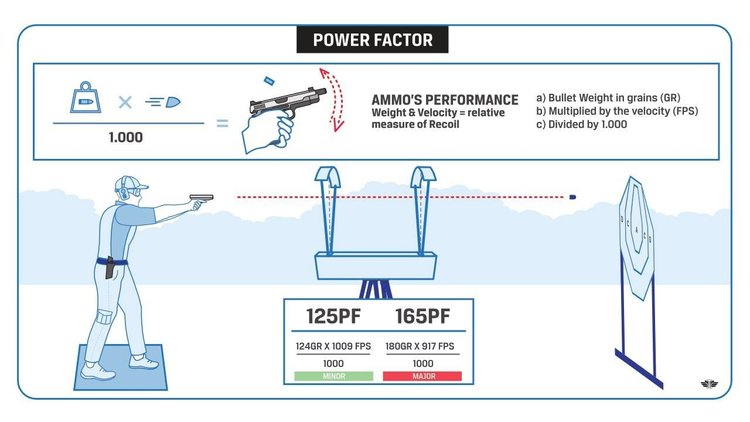
Power factor is designed to help keep the playing field equal in USPSA divisions around ammunition performance and firearm recoil. The Power factor calculation is an effective way to measure ammunition’s relative performance from a competitor’s firearm and group them into Major and Minor categories.

Recoil Effects 

When your pistol generates lower recoil or muzzle flip, your ability to take accurate follow-up shots and shoot faster on targets is increased. When you have heavier recoil, your ability to shoot quickly with follow-up shots is reduced, as the gun can be more challenging to control. 

Power Factor Rating

Minor power factor will have a rating of 125 to 164, and major is 165 or higher. Larger calibers and cartridges are more commonly used to make major power factor because they support larger powder loads. Smaller centerfire cartridges, like 9mm, are more common in minor.


Calculating Power Factor

The power factor calculation uses your bullet’s weight in grains, multiplies that by the velocity in feet per second, then divides it by 1,000. For example: 

[Bullet Weight (Grains) x Velocity (Feet Per Second)] / 1,000 = Power Factor (PF)

• Minor PF = 125 to 164

• Major PF = 165 or greater

Minor Power Factor Example:

• 9mm 124 GR bullet traveling at 1,009 Feet Per Second (FPS).

• Multiply 124 by 1,009 and then divide by 1,000, and you get 125.116.

• Minor 125 PF = (124 GR x 1009 FPS) / 1,000.

Major Power Factor Example:

• .40 S&W 180 GR bullet traveling at 917 FPS.

• Multiply 180 by 917 and then divide by 1,000, and you get 165.06.

• Major 165 PF = (180 GR x 917 FPS) / 1,000.

Note: in USPSA competition, any ammunition and pistol combination that does not perform at or above the minor 125 PF floor cannot receive a stage or match score.


Major vs. Minor Scoring

When a firearm division supports major and minor power factor scoring, you will have a scoring advantage shooting major power factor. Higher points are awarded across the lower-scoring areas of paper targets. When you score one target, it does not seem like a significant advantage, but it makes a difference when added up over an entire stage of targets. 

Ammunition performance affects how you score cardboard targets. Major power factor is awarded more points for less accurate hits on cardboard targets. This difference may not seem like much on a single target, until it is taken across an entire stage of multiple targets.
Major vs. Minor Hits

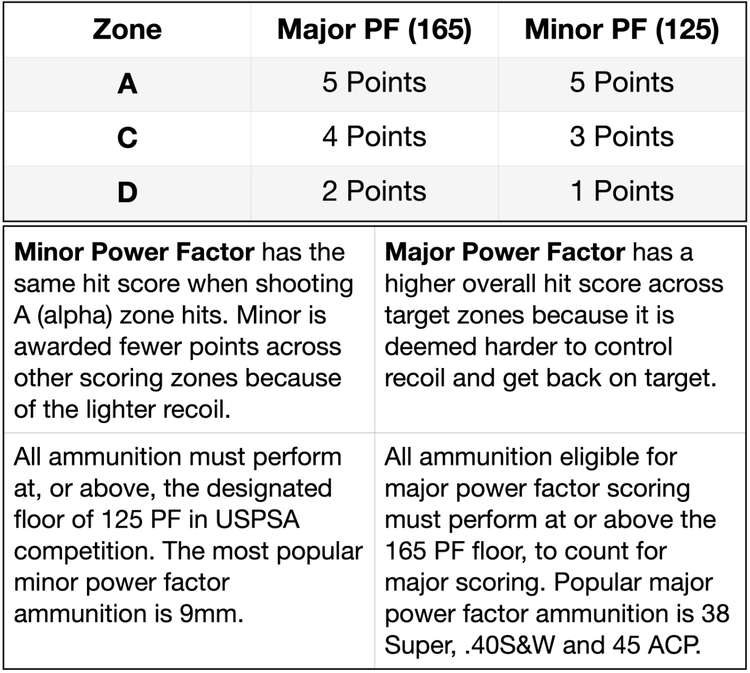
When shooting anything other than alphas, the differences in major and minor hit scoring start to appear. This example shows two hits: one alpha and one charlie. Depending on the power factor (PF), different points will be awarded.

Major will get five for the A and four for the C, for a total of nine points. Minor will get the same five for the A but will get only three points for the C, for a total of eight points.

If you are competing in a single power factor division, you won’t need to think about the differences in multiple power factor scoring. However, if you are shooting with minor power factor and your competitors are shooting major, it is essential to understand the examples below to play a competitive game.

When you shoot minor power factor in a USPSA division that supports major and minor, you must understand how the lower recoil contributes to your performance and if it is worth it. There is a progressive decrease in target scores as you move from all alphas to a mix of other scoring zones.
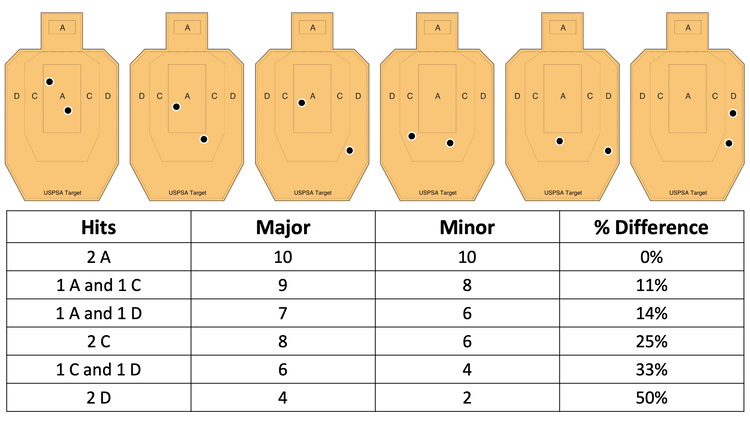
Major vs. Minor scoring and Divisions

For Open, Limited, Limited 10, Single Stack 1911, and Revolver divisions, you will collect higher points using major power factor ammunition. For divisions like Production and Carry Optics, everyone is scored using minor power factor only, so there is no advantage to shooting major.


😸 Competition Electronics ProChrono DLX with Bluetooth

The modern chronograph consists of two sensing areas framed by rods topped by diffusing screens or artificial lighting above (or below) optical sensors that detect the passage of the bullet. The time it takes the bullet to travel the distance between the sensors is measured electronically from which velocity is calculated and displayed.

ProChrono DLX

Features:

On-board Bluetooth connectivity, and more options with FREE apps for iOS, Android, Kindle, PC, and Mac
Internal and external refinements with updates to the circuitry and enclosure design
Built in full featured operating system with multiple shot string memory and statistics
Sensing system compatible with a wide variety of light conditions and projectiles
Faster internal shot clock for improved accuracy to +/- .5% or better
Made in the USA quality at an affordable price
2 year warrantee against defects in material and workmanship, and a 1/2 price repair guarantee
Over 30 years of experience in chronograph design and manufacturing
Replaceable Alkaline 9 volt battery power (not included) for 20+ hours of operation
Quality accessories and replacement parts at a reasonable price
Made in USA with real service and support

Specification:

Velocity Range: 20 – 9,999 feet per second
Temperature Range: 20-100 degrees Fahrenheit
Size: 16x4x3-1/4 inches
Weight: 2.1 lbs
Battery Required: One 9-volt alkaline battery
Battery Life: Approx. 20 hours of operation
Current Consumption: Approx. 20mA
Mounting Hole Thread: 1/4×20
Guide Wire Size: 3/16×16 inches
Memory Capacity: Up to 9 strings of up to 99 shots each
Minimum Time Between Shots: 500 mSec
Shot Timing Resolution: 31 nSec (8000 counts @ 4,000fps) Crystal Controlled
Accuracy: +/-.5% of measured velocity or better
Bluetooth: BT2 and BT4LE

Download APP’s to cellular phone to connect to the chronograph gives read out and low too average.

Digital Link on cellular phone APP’s is great way to get read outs !

😸 My Springfield Armory Ronin Operator .45 ACP

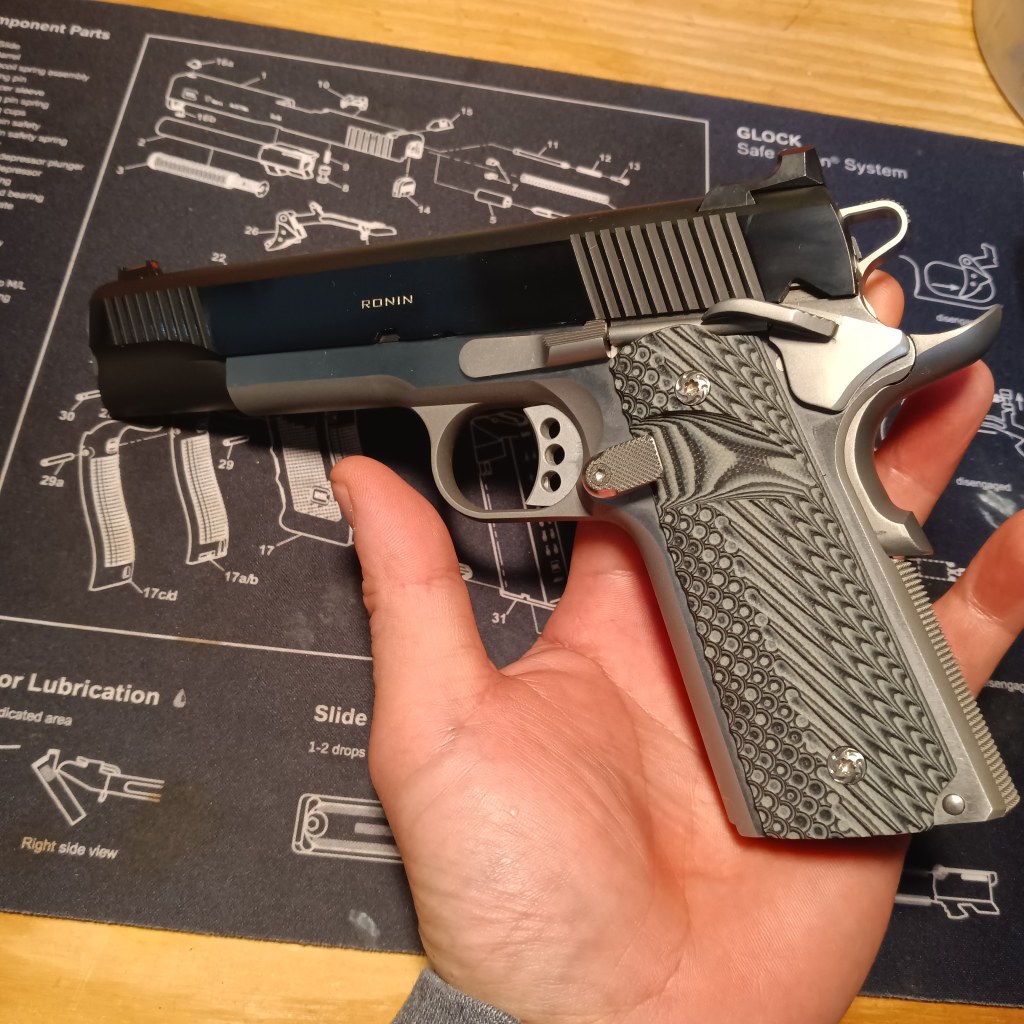
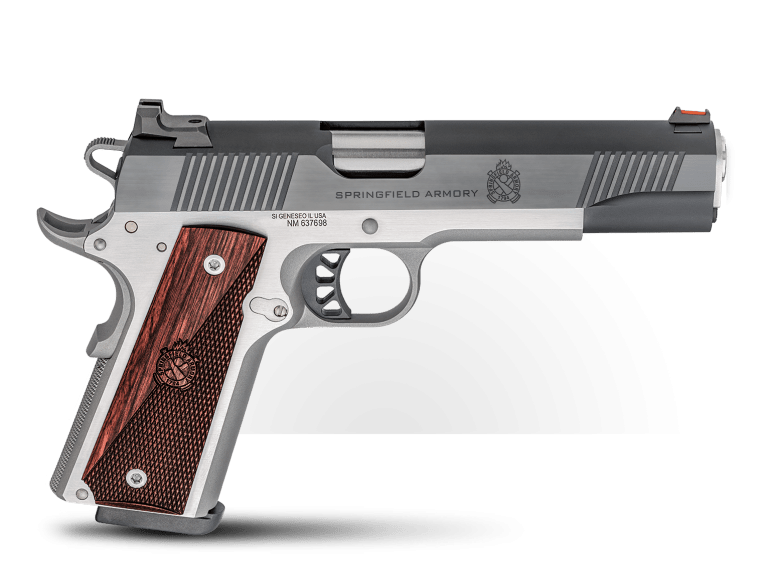
My Springfield Armory Ronin Operator .45 ACP, Full size, 5 inches barrel, MEC Gar magazines, Wilson Combat aftermarket part’s, VZ Custom Grips, Tru Glo TFX Pro sights.

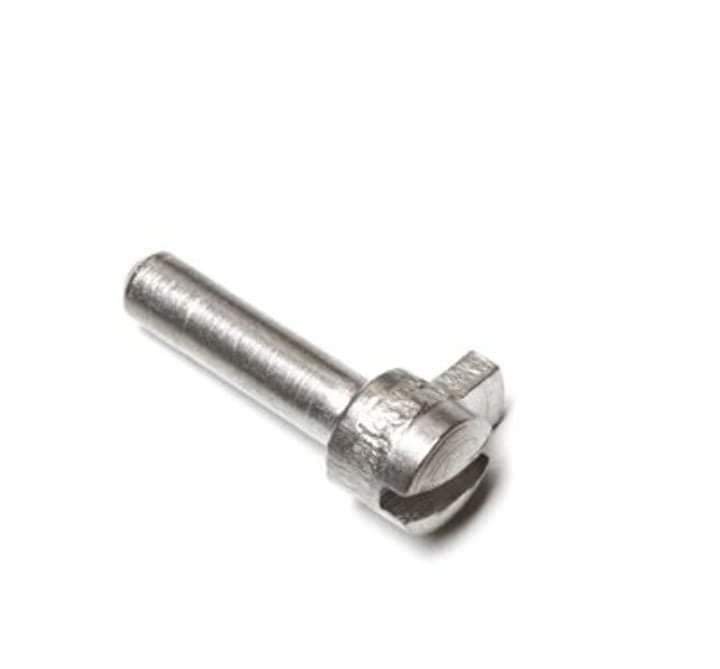
Bad mistake on my part. I stripped magazines screw bolt head slot. Had to replace the magazines screw bolt. $2.95

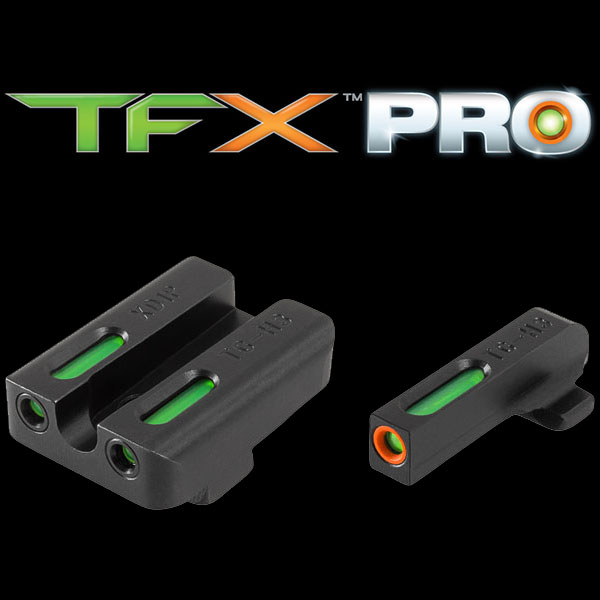
Tru Glo TFX Pro sights for day and night uses. Tritium night sights and Fiber optic day sights.

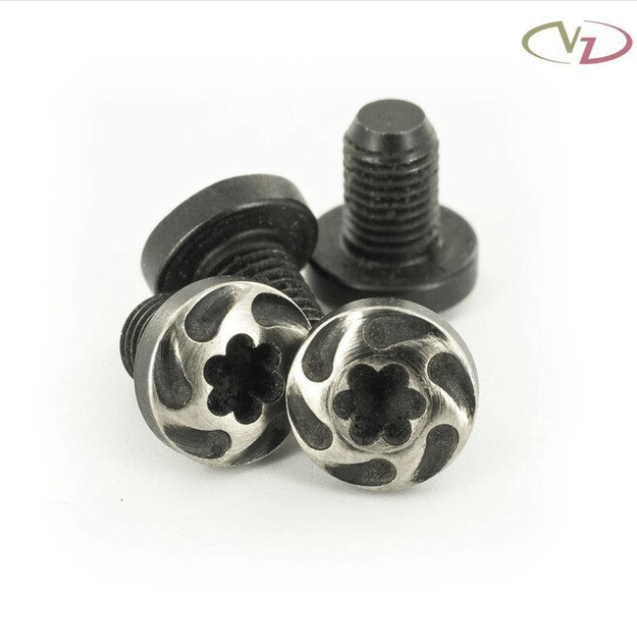
Turbo Screws hardware for magazines grips.

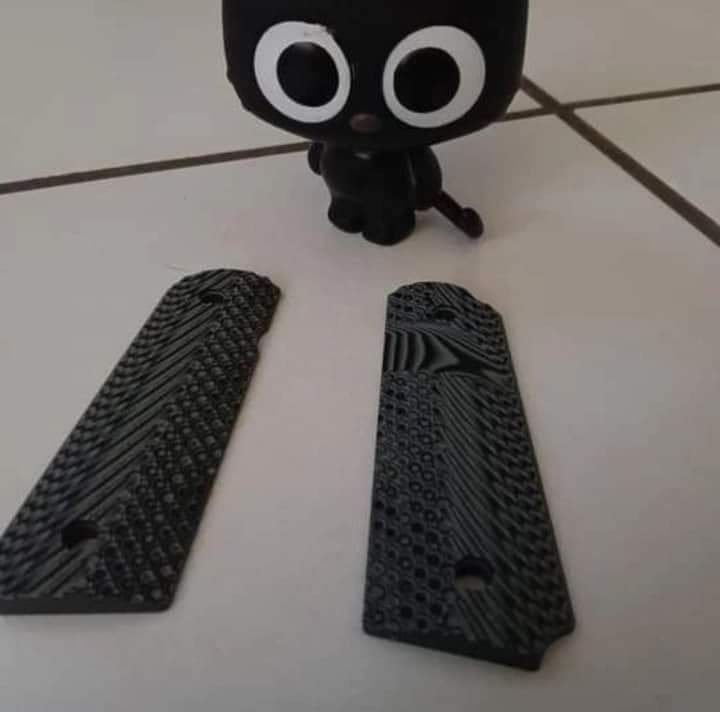
VZ Custom Grips – Operator II

The VZ Operator II™ is our most popular 1911 grip for a reason. With diagonally cut grooves on the back and a more aggressive golfball pattern at the front, these grips are the perfect balance of spicy and sweet right where you need it most. Combine that with the beautiful aesthetics of the texture, the thumb-notch mag release cut, and unbeatable durability of G-10 and it’s no wonder people love this grip. Many others have tried to duplicate it, but nothing beats the original from VZ. Great for concealed carry, target practice, competition shooting, and even safe queens.

Specifications

  • Frame: Full-Size 1911
  • Weight: 2.18oz – 61.8g (approximate)
  • Material: G-10, Carbon Fiber, or Micarta
  • Aggressiveness: 4 out of 5

Just like all of our other G-10, Micarta, and Aluminum products, VZ Operator II™ 1911 grips are custom made and hand finished right here in the USA, by Americans, from materials made in America, using machines also made in America.

*Carbon Fiber products are made using a blend of G-10 and Carbon Fiber layers.

The VZ Operator II™ is our most popular 1911 grip for a reason. With diagonally cut grooves on the back and a more aggressive golfball pattern at the front, these grips are the perfect balance of spicy and sweet right where you need it most. Combine that with the beautiful aesthetics of the texture, the thumb-notch mag release cut, and unbeatable durability of G-10 and it’s no wonder people love this grip. Many others have tried to duplicate it, but nothing beats the original from VZ. Great for concealed carry, target practice, competition shooting, and even safe queens.

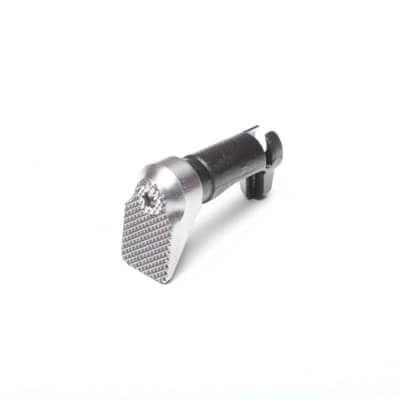
Wilson Combat – This extra large magazine release is ideal for shooters with very small hands or competition shooters looking for the edge at a match when making magazine changes. The large checkered paddle can’t be missed under pressure.

Not recommended for carry or tactical pistols. Drop in fit to most guns, some grips will require inletting.

Large checkered paddle is perfect for fast reloads
Solid stainless steel construction
Drop-in fit, grips may require inletting

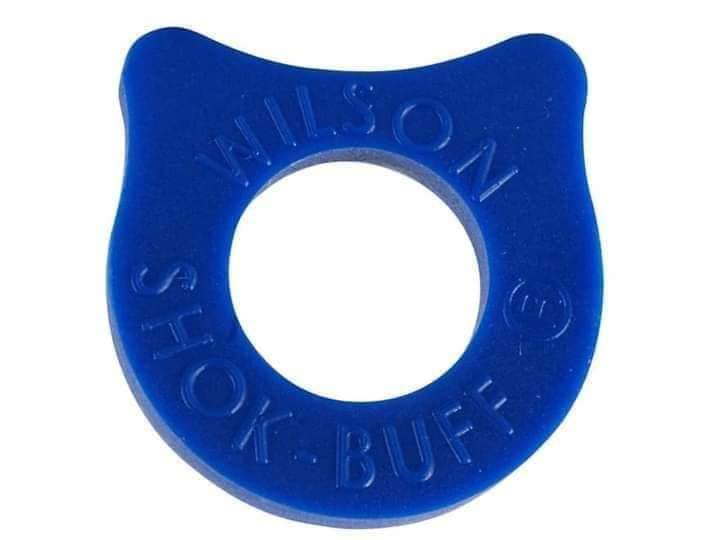
Wilson Combat – The SHOK-BUFF® prevents the slide from battering the frame during recoil by sandwiching a 1/10″ thick poly fiber buffer between the slide and frame contact areas. When you are shooting high performance loads in your 1911 style pistol, you want the extra protection that the original SHOK-BUFF® provides.

Prevents the Slide from Battering the Frame During Recoil
Optimum Balance Between Sho

The SHOK-BUFF® prevents the slide from battering the frame during recoil by sandwiching a 1/10″ thick poly fiber buffer between the slide and frame contact areas. When you are shooting high performance loads in your 1911 style pistol, you want the extra protection that the original SHOK-BUFF® provides. One “Imitations” brand on the market claims they are better because their buffer lasts a little longer. The object of the frame to slide buffer is to protect the pistol from wear, if the buffer is not soft enough to take the damage instead of the pistol what have you accomplished? We feel the original SHOK-BUFF® is the optimum balance between shock absorption and longevity. Easily replaceable after absorbing up to 1,000 rounds of repeated firings, the SHOK-BUFF® slides over the recoil spring guide between guide and spring. Why take a chance on an inferior die stamped copy when you can have the original injection molded SHOK-BUFF®? With over 30 years of competition and street proven experience and hundreds of thousands sold, the original SHOK-BUFF® is still the best. Don’t be fooled by imitation products, current production Wilson SHOK-BUFF® buffers are royal blue and bear the SHOK-BUFF® name.

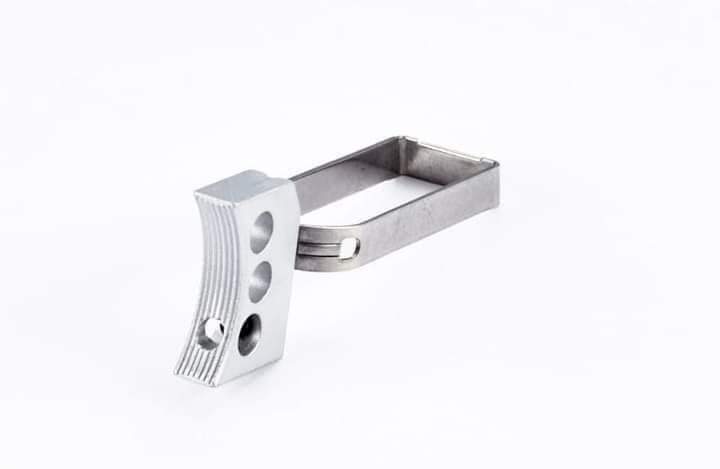
Wilson Combat – Match grade trigger with long pad. The #1 trigger is the first aftermarket 1911 part that Wilson Combat brought to market almost 40 years ago and now we have completely revised this famous part for our customers.

This best-selling trigger has all the features necessary for a clean, crisp trigger pull and will drop right into most production 1911 handguns with little or no fitting and only minor final adjustment required.

The matte finished, three-hole serrated aluminum Pad is the ideal length for most shooters and has a drilled and tapped overtravel screw to allow for a minimum of backlash after the hammer falls.

The three-hole design is lighter in weight than most factory triggers and reduces the likelihood of trigger bounce which can cause “hammer follow” during operation that can damage your hammer and sear surfaces.

The hardened stainless steel bow is precisely blanked, finely polished and includes take-up tabs to adjust trigger pre-travel prior to sear release.

Matte finished, lightweight serrated aluminum pad with drilled and tapped overtravel screw for backlash adjustment.
Polished stainless steel bow with pre-travel adjustment tabs to adjust trigger take-up prior to hammer fall.
Precision machined and engineered part will drop in most factory 1911’s with little to no fitting required.

😸 Springfield Armory Ronin Operator .45 ACP

Featuring an unyielding commitment to strength, reliability and quality, the Ronin® 1911 combines a legacy of service with the features modern shooters demand.

Strength is a core element of the Ronin line, with all models offered featuring forged steel slide, hammer-forged barrels and forged frames. The steel slide features a beautiful hot salt bluing finish that contrasts nicely against the forged stainless steel frame of the 5″ model and the forged alloy frame of the 4.25″ and EMP model, the latter of which features a satin aluminum Cerakote® finish.

Designed and built for a lifetime of service, the Ronin family of pistols offers 1911 enthusiasts a highly refined handgun with unparalleled durability and strength.

The Springfield Armory® Ronin® in .45 ACP combines a legacy of service with the features modern shooters demand. Built on a foundation of strength, the Ronin sports forged steel slides and frames — carbon steel in the former and stainless steel in the latter — and a hammer-forged barrel for durability. The pistol features a standard 5″ barrel, traditional recoil spring assembly and barrel bushing, and a tactical rack rear sight with a fiber optic front. The result is a traditional, yet cutting-edge 1911 ready for a lifetime of service.

  • CALIBER: .45 ACP
  • COLOR: Blued / Stainless
  • BARREL: 5″ Forged Stainless Steel, Match Grade, 1:16
  • SLIDE: Forged Carbon Steel, Blued
  • FRAME: Forged Stainless Steel
  • SIGHTS: Fiber Optic Front, Tactical Rack White Dot Rear
  • RECOIL SYSTEM: GI Style
  • GRIPS: Crossed Cannons Checkered
  • MAGAZINES: (1) 8-Round
  • WEIGHT: 40 oz
  • LENGTH: 8.6″
  • HEIGHT: 5.5″
  • MSRP: $899

😸 Welcome to 1911 Firearm Cat

1911 Firearm Cat AKA “Gary Hybridge” is my journey to USPSA Competition Shooting “Single Stack” Division, Gunsmithing and Reloading Ammunition, Ballistic Research, Dry Fire Training, USPSA Rules And Regulations.

Since 5th grade been shooting firearms and 7th grade started to reload ammunition RCBS Rock Chucker Press.

Extensive Training:

Gerg Hamilton – Insight Training Center.
John Holschen – Insight Training Center.
Jeff Cooper – American Pistol Institute.
Marty Haze – Seattle Firearm Academy.
Richard Marcinko – SOS Temps, Inc.
Bob Luis – Blackwater USA.
DR. George J. Thompson – Verbal Judo.
Massad Ayoob – Leathal Force Institute.
Andrew Branca – Law Self Defense.
Mr. Green – ZERT Training Center.
Alan Gottlieb – Right Of Gun Owners.
ASP – ASP Baton.
Taser International – X26 Taser.

Seattle Cascade Arms as “General Gunsmithing” with “AR-15 / M-16 Rifles Specialist. 1 1/2 years studying.